
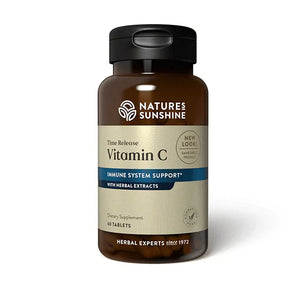
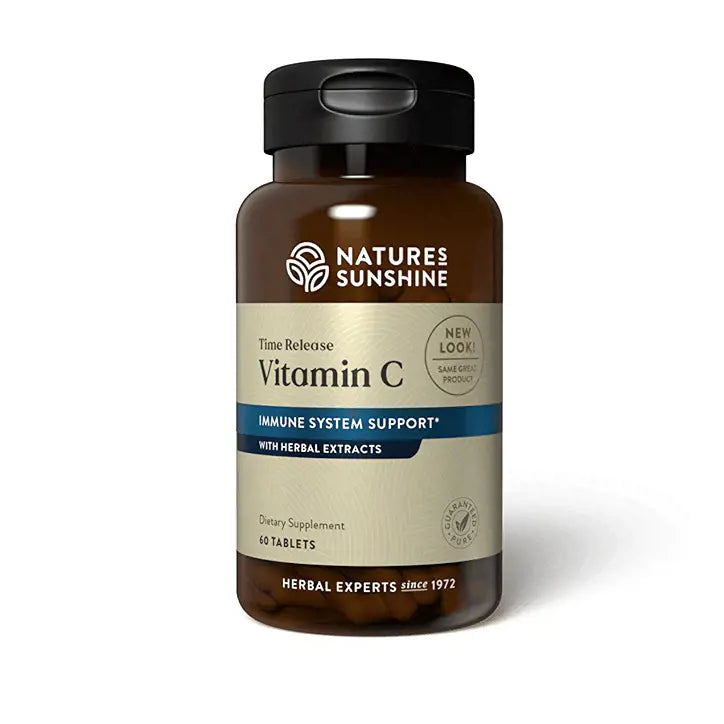
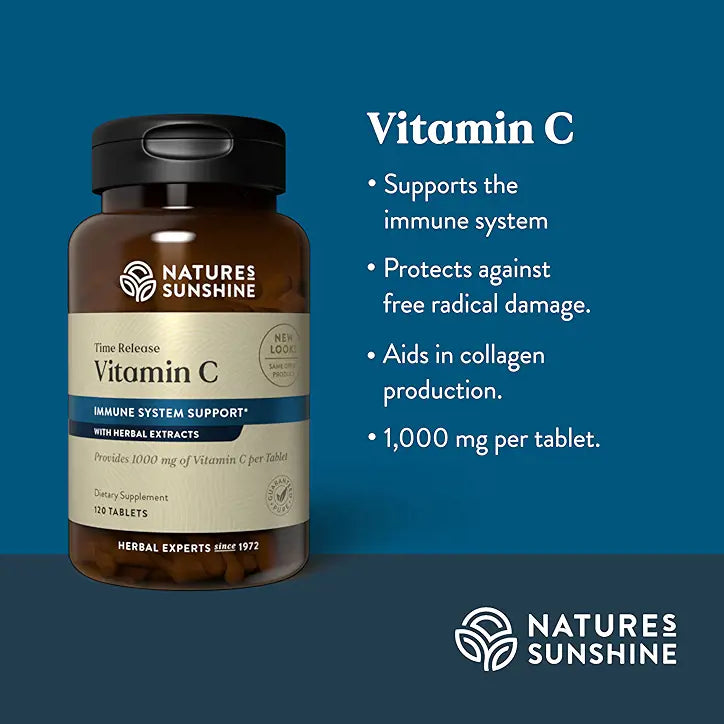
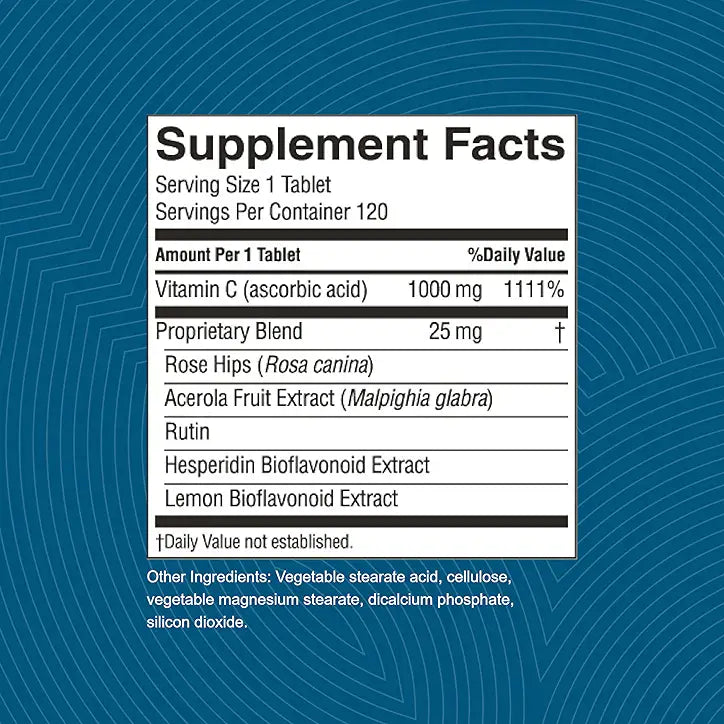
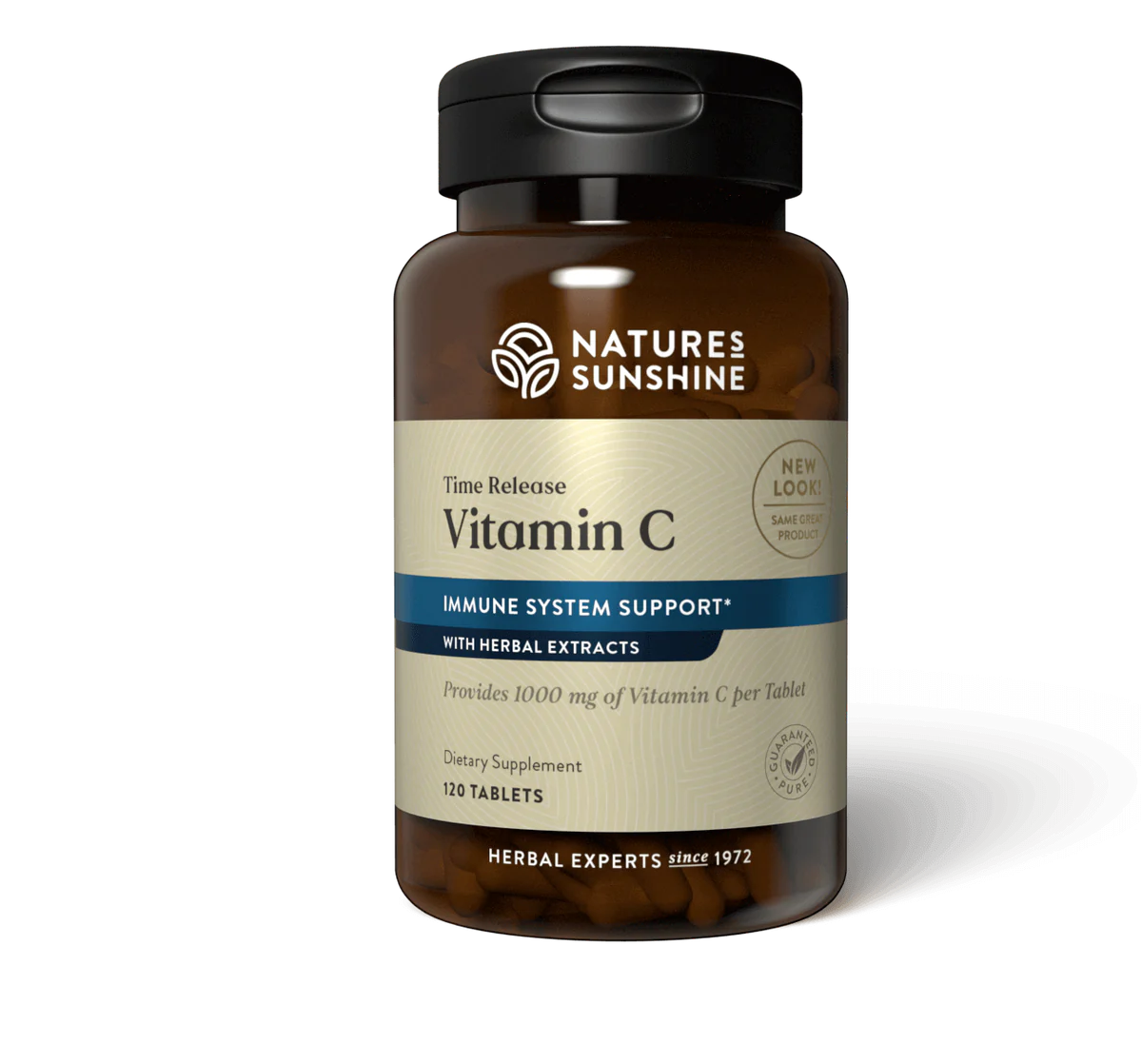
Vitamin C all day long. Time released technology delivers a steady release of C, bioflavonoids, Rutin and Rose Hips, keeping your immune system happy.
- Supports the immune system & collagen production
- Protects against free radical damage
HOW IT WORKS
Vitamin C performs many functions involving the immune system and tissue development. It is involved in iron absorption and in the syntheses of enzymes, hormones and proteins. The adrenal glands need large amounts of this nutrient in order to support immunity and help produce energy. Vitamin C is easily washed from the body and needs to be replaced constantly. Without vitamin C, the body cannot make collagen, the substance that holds the body’s cells together and maintains skin integrity. This product allows more efficient use of vitamin C by slowly releasing it into the body. Each tablet is designed with a sustained release profile to slowly deliver the vitamin C over an extended period of time.
WHY OUR VITAMIN C?
Vitamin C is water-soluble. It is not stored in the body, so you need to replenish it regularly through diet or supplementation. Our time-release technology provides for a slow, steady release of vitamin C over a six-hour period. This allows your body to use it more efficiently. Our complementary herbal base features lemon bioflavonoids, rutin, hesperidin and rose hips for extra phytonutrient support. Our lemon bioflavonoids are non-GMO, vegan and strategically sourced globally to ensure premium quality any time of year.
THE STORY BEHIND VITAMIN C TIME RELEASE (1000 MG)
We launched our time-release formula in 2003. But the vitamin C story goes back many decades earlier. In the 1930s, Hungarian chemist Albert Szent-Györgyi discovered and named ascorbic acid, which literally means “anti-scurvy.” Many sailors had suffered from scurvy on or after long sea voyages without access to fresh produce. Later Szent-Györgyi discovered rutin, a bioflavonoid nutrient that supports vitamin C’s activity. He won the Nobel Prize for Medicine in 1937 for his discovery and his description of oxidation. American biochemist and two-time Nobel Prize winner Linus Pauling studied scientific literature on vitamin C and became a true advocate for this nutrient, penning Vitamin C and the Common Cold in 1970. Rose plants grow all over the world in the northern hemisphere. Native North Americans ate rose hips in the wild as a dietary staple. During World War II, when citrus fruit was scarce, Britons gathered rose hips and made them into syrup to nourish children.
RECOMMENDED USE
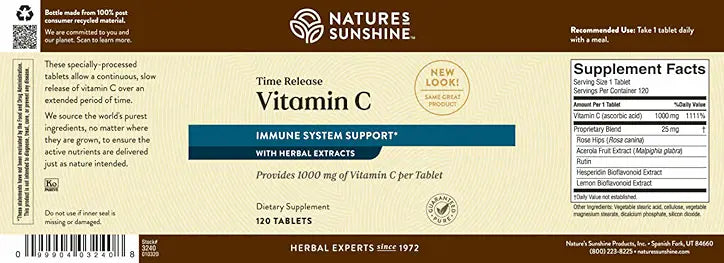
Take 1 tablet daily with a meal.

